Saturday, August 29, 2009

Sixth grade Art Lessons and Supply List

I begin teaching next week and I've decided that this will be the year that I will introduce a whole new set of art lessons. Sounds ambitious right? And maybe a bit crazy? For me though, introducing a new lesson and seeing how well the kids adapt it and enjoy it is why I teach. It's just so much fun!
I'll be teaching sixth grade next week. I have five sixth grade classes and that means, whatever project I begin, I better like it because I'll be repeating it over and over and over...

But this burst of creative energy won't help you until I post my lessons and I can't post my lessons until I've done the lessons! But don't worry. I'll post them as soon as they are finished. In the meantime, take my advice from lessons that are tried and true. Here are my favorites:

Sixth Grade
Typically, I begin the year with a line drawing. One of my absolute favorites is the Wild Hair Line Drawing. Kids really get into this one and I like it because of the easy prep. Like most line drawings, removing the project from the child requires precise timing. To soon and they aren't done, too late and the child might get bored/get silly/decide he's too cool for sixth grade art/or any other imaginable scenario that results in a mess of scratchy lines.
It's a fine line in sixth grade, so my advice to you is to have lots of pattern examples on the white board and show them how to make them.
Time: Depends. Usually one-60 minute class, but it might take some kids longer.
Supplies: 12" x 18" white drawing paper (see list under "Art Organization" in the menu bar.), black fine tip marker.


It's always fun to do a self-portrait at the beginning of the year, but by sixth grade, the novelty of drawing one's self is wearing thin. So here's a fantastic alternative: Modigliani Self Portraits. Not only do they learn a little bit about Modigliani, but the process for drawing his faces is fail proof. I have to thank Kathy at Art Project for Kids for this one. It's a real star.
Time: Two 60-minute classes
Supplies: 12" x 18" black drawing paper, light colored oil pastel (white, yellow, etc), ruler and pencil, oil pastels in a variety of colors (make sure to have enough flesh tone)


I'm going to list one more, as this one takes 4-5 sessions. Of course, the smaller the class, the easier it is to teach and the faster the kids will complete the project. If you have over 30 kids in your class (you have my sympathies) and you have no help, it will be a bit of a challenge. Rural Barns and Farms is an exciting lessons because the kids will not believe the results. Even I couldn't believe how well they turned out. They learn a ton of skills and it's a fantastic way to integrate math into an art curriculum. And it's not just about math, tons of watercolor techniques are used here.
For a full tutorial, consider purchasing my new "Architecture Made Easy" PDF. It's worth it!
Time: 4-5 Sixty-minute classes
Supplies: 12" x 18" watercolors paper (if you don't have watercolor, regular white paper is fine. This is the only project where regular paper just might work out better, so don't stress), pencil, eraser, ruler and template, watercolor paints, brushes and colored pencils.


So there you have it. Three fantastic projects that will get you to the end of October. Good luck and love up those sixth graders: next year? Junior High!

Wednesday, August 26, 2009

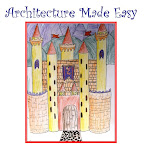
DEEP SPACE SPARKLE presents...Architecture Made Easy

Drawing buildings are easy with my secret weapon...TEMPLATES! By using your own cardboard templates, architectural-based lessons are a breeze. They not only save time, but frustration as well. I've demonstrated three of my most popular architecture lessons: Country Barns, Castles and Victorian Homes.

Architecture Made Easy is a 23-page booklet that is best suited for the upper elementary school student. It is destined to be your best tool in your art lesson repertoire.
  • In Country Barns, students use the templates and a ruler to make a grid, then connect the points to draw a very cool, 3-D barn. Watercolors and colored pencils finish up this impressive lesson.
  • Drawing Castles have never been easier! Using the templates to draw towers and turrets leaves precious art time for the really fun stuff like making the drawbridges, kingdom banners and battlements.
  • Positioning rectangle templates together makes creating your own Victorian Dream Home a snap. Trace around the templates to create a multi-level home that is fun and unique!
All lessons come with a supply list, complete photo tutorial, how-to-draw instruction handouts (my personal favorite!) and samples of real student work.
The PDF is designed to be printed out or you can view from your computer screen.

ALL PDF'S ARE DOWNLOAD ONLY. THEY WILL NOT BE EMAILED OR MAILED.
Click on the "Add to Cart" button below to purchase.
Only $5


Tuesday, August 25, 2009

Fifth Grade Art Lessons and Supply List

In fifth grade, kids develop serious art skills and personalities shine through. Sometimes, I can identify artwork based on the style of its owner. I'm always searching for fifth grade lessons that cover a wide range of techniques. This is the grade I want to expose the kids to as many different materials as possible, because next year, projects get longer and more involved.

Here are my top five art lessons to begin fifth grade with....

Fifth Grade
To learn student names and jump right into creative nirvana, begin the year with Matisse Inspired Name Panels. I love the process of this project. It's not easy to free-form cut initials out of paper, but that's what I expect. I demonstrate a few tips and most kids will grasp the concept quickly. Some won't but they'll come up with other solutions that are quite clever. However they manage, these name panels are a fun, colorful project to kick off the year. They look really cool on the walls, too.
Time: 2 50-minute classes (try not to extend this lesson...encourage them to finish it up. It's hard to store all the itty bitty pieces.)
Supplies: 10" x 16" white paper (yes, it's narrow. You'll need to cut these from a full sheet of 12" x 18" paper), colored paper scraps (the more variety the better), glue sticks and scissors, colored paper sheets for mounting.


I love, love, love this project. It's adapted form an Arts Attack Video lesson. The Rouault Inspired Royalty Painting is a fantastic lesson in drawing without a pencil. Students create the whole painting using just a paint brush. Some kids understandably freak out once they learn this, but after a quick demo, they are eager to start. The results are beautiful and surprisingly enough, it's a fast project. I tell you, eliminate a pencil and it doesn't take long for the artist within to emerge!
Time: 2 50-minute sessions (not everyone will finish, but most will)
Supplies: 12" x 18" white paper, photocopy the face cards from a deck of cards (enlarge them), tempera paint (red, blue, yellow, green, white and orange), watered down black tempera paint, small paintbrush and medium paintbrush.


In keeping with the theme of colorful projects, the next lesson I would do is Chalk Lizards. I don't use much chalk in the lower grades, but I really bring it out for the upper grades. They seem more able to cope with the mess. Show the kids how to draw a simple lizard or chameleon, use only a black oil pastel and fill in with chalk. How easy is that? This project has that WOW factor, so get ready for the compliments.
Time: 2 50-minute sessions
Supplies: 12" x 18" black drawing paper, colored chalk, black oil pastel


Slow things down a bit and bring out the markers. This Drawing inspired by Keith Haring is a popular project with fifth graders. This lesson originated from an article in Arts and Activities magazine, but I don't remember which one. I tried it long after I had clipped the article and was amazed at how much the kids embraced the energy of this project. Its a great lesson because kids relate to it and because it has an easy prep. Basically just paper and markers!
Time: 2 50-minute sessions (this is another great project to begin the year with as students can pull it from their portfolio anytime throughout the year to finish it.)
Supplies: 12" x 15" white drawing paper (trimmed from a 12" x 18" sheet), markers in broad and fine tip.


I have to stop doing this one..but the Picasso Inspired Oil Pastel Portrait is just too good. Absolutely every student is successful with this lesson. It's easy, colorful, expressive and relatively quick. Again, the lesson originated from an article in Arts and Activities Magazine a few years back and it's been a favorite of mine ever since.
Time: 2 or 3, 50-minute sessions
Supplies: 12" x 15" white drawing paper, oil pastels including black.

There you have it. My top five. Of course I love all of my lessons posted, but if I could chose just five, these are the ones I would start with. Good Luck!
Next up...sixth grade!

Monday, August 24, 2009

Fourth Grade Art Lessons and Supply List

Fourth grade students enjoy working diligently on a piece of art for a long time. Sometimes too long. They take their work seriously and don't like to be rushed. This is a good thing because they are not daunted by projects that span over a number of weeks. But hurrying them along gently is a skill you must master with this age group. Last year I was lucky enough to teach my 4th grade daughter and her friends. I LOVED her class but unfortunately, their enthusiastic, respectful and endearing behavior set my expectations very high for fourth grade. We should all be so lucky, huh?
In any case, fourth grade is a gift to teach and these are my favorite lessons to begin the year with them...
The fifth in my series of Back-to-School Art Lessons for K-6. Check out my supply list on the left side bar.

Fourth Grade
You know what I'm going to say; line drawings are the easiest projects to start with, but let's jazz it up a bit. Name Design is a great project not only because you get to learn the names of new students but it requires little in the way of supplies. And it's fast. No need for perfectionists here!
Time: 2 50 minute classes
Supplies: 12" x 18" white paper, black markers, colored broad tip markers


The next project, How to Draw a Castle is another lesson that requires little supplies and could either be started now or later. I chose now because the set-up is easy and I want things easy at the beginning of the year. Its the type of project that children are impressed by and are eager to learn the tricks of making this a doable drawing.
Time: 3-4 50 minute sessions Supplies: 12" x 18" white paper, pencils, erasers, fine tip black pen, woodless colored pencils or colored pencils of your choice, cardboard templates cut to size.


My absolute favorite lesson for fourth grade is Colorful Toucans. It is vibrant, fun, and so easy to do. Demonstrate a simple toucan drawing on the whiteboard and encourage each child to make the toucan their own. Give them options: single toucan, double, or just a head. Whatever they like! For added variety and instruction, give the kids just three colors to paint their toucans: red, yellow and blue. This "colorwheel" version adds an extra level of instruction and learning to the project.
Time: 2-3 50 minute sessions
Supplies: 12" x 18" white paper, black oil pastel, tempera paints


Due to the length of time it will take your students to finish this project, you now have September and October covered. My next choice of project would be:Under-The-Sea Chalk and Glue Drawings.
My only advice for this lesson is that it requires the art to lay flat until the glue dries. If you have back-to-back fourth graders coming in (I had three 4th grade classes in a row) you need to generate lots of floor space for the glue dripped paper. Otherwise, this project is fantastic!
Time: 3 50 minute sessions
Supplies: 12" x 18" black paper, White school glue, pencils, colored chalk pastels


Good Luck 4th Grade Teachers...next up: Fifth Grade!

Saturday, August 22, 2009

Third Grade Art Lessons and Supply List

Next in my series of back-to-school art lessons: Third Grade. Pick any lesson in my side bar repertoire (K-6) and most third graders will embrace it. They can do anything artistically. Often I have combo classes and teach second and fourth grade lessons to third grade students. They can't tell the difference and they shouldn't: my art lessons are adaptable for any grade. But, here are my personal favorite that seem to suit third graders well...

Third Grade
My Hot Air Balloon Drawing is a great way to start off the year. It's fun, colorful, doesn't require much in the way of supplies and like line drawings, requires a bit of listening and develops fine motor skills. Now, you can get a bit technical with this one, but I'd recommend loosening up a bit. It's just a balloon for Pete's sake. I say this because my instructions for this lesson focus on the technical aspect of drawing a hot air balloon, but go ahead and adapt it to suit your needs.
Time: 2 50-minute sessions
Supplies: 12" x 18" white paper, broad tip markers, pencils and erasers, cardboard template.


I've tried many of the classic "Masters" lessons (Starry Night, Monet, etc) but Van Gogh Sunflowers is my favorite. The combination of oil pastels and flowers really make this a standout finished piece. This is the art project that parents will frame. But in order to make it the best it can be, encourage the kids to press hard with their oil pastels and for heaven's sake, tell them that oil pastels are suppose to break! This will take the fear out of them.
Time: Really varies. Some kids finish in 2 sessions but some can take up to 4. That's why I do this lesson at the beginning of the year so if a child finishes a project early in a future class, he can pull out the sunflower project and work on it. Be patient. It's worth it.
Supplies: 12" x 15" white paper (cut large paper down a bit) and oil pastels.


LOVE this next lesson: Symmetrical Butterflies. When kids open up the paper to reveal their butterfly, some literally gasp. Seriously. They think it's SO cool. This lesson can be modified to use any number of paint, but I use watercolor (it works fine on this paper). To jazz it up a bit, use liquid watercolor mixed with glitter paint and Mod Podge. Sound familiar? If you guessed that this was the concoction I used for Second Grade's Glitter Fish, you're right! If you're really smart you will save the leftover paint from second grade to do with this project.
Time: 2 50-minute sessions
Supply List: Varies depending on your choice of finishing, but for the standard Butterfly: 12" x 18" white paper, dark colored oil pastel, watercolor paints (cake paints are fine), scissors, glue, colored 12" x 18" white paper.


Remember all the Eric Carle styled paper you made in second grade? Well, this is a good time to pull it out and use it again. Paper Cut Portraits is a dynamic twist on portrait art. Although it can take some time, the results are worth it. Read over the instructions (better yet, download my Fun with Portraits Lesson Plans PDF) and plan your strategy.
This project does require a few specific instructions so the first stage is not a great free expression type of project. The kids will need to first draw a simplified portrait on white paper and although it sounds easy, this is the step that you will need to monitor. The goal: Keep the face simple. After that, it's all fun.
An alternative project keeping with the same technique and theme is...

Abstract Colored Paper Portraits
Time: 3-4 50 minute classes
Supplies: 12" x 18" white paper, 12" x 18" colored or Eric Carle styled paper, Skin tone paper, colored paper for shirt, colored paper for hair, black marker, scissors, glue sticks, scraps of colored paper, decorative details such as buttons, colored markers.


This lesson plan will take you well into the end of October. Don't be alarmed if some of your third grade students have unfinished work. Many of these projects, especially the Sunflower Project and Portrait Project require time. It's common for me to take one day at the end of October just to finish incomplete work. The kids love the chance to catch up and it's a good opportunity to work individually with students.

Good Luck Third Grade Teachers! Tomorrow....Fourth Grade!

Friday, August 21, 2009

Second Grade Art Lessons and Supply List

Second graders hover between adorable and volatile. On one hand, they're easy to please, but on the other, this is the age where you begin to see a certain rowdiness from a certain gender of second graders. I've had classes full of gentle, respectful second graders and then classes full of little pistols. The latter group is certainly the challenge, but as you can all attest to, taming a willful child with art is the best feeling there is.
So here are my favorite lessons to inspire the angels and intrigue the rest...

As always, you'll find a list of basic supplies and an optional list of supplies in the left sidebar (scroll down).

Second Grade
By now, you know how I like to begin the year, but with second graders, I like to jazz it up a bit. My Connected Flower Line Drawing may seem dainty for the boys in the room, but believe me, they like it. Practice a bit yourself so you can teach the kids some cool ways to draw flowers. If someone refuses to draw flowers (and yes, there will be a few) have them draw wacky shapes. Triangles with circles attached or squares with triangles inside. Whatever it takes to get pen down on paper.
Time: Two 45-50 minute classes
Supplies: 12" x 18" White drawing paper, Crayola broad tip markers in a variety of colors, black marker


After two classes of coloring flowers, the kids will be ready to paint. Because it's Autumn, scarecrows tend to be a favorite subject of mine. My Color Wheel Scarecrows teach drawing, painting and color mixing skills plus it looks fantastic displayed on the walls. You'll notice a huge disparity in the amount of time it takes for the children to paint, so keep up the pace by encouraging the kids to add water to their brushes, not to worry about going outside the lines and by offering tons of praise (especially when they go outside the line, i.e "What expressive lines!"You get the idea.)
Instead of scarecrows, here is another lesson that uses the very same technique:
Colorwheel Sailboats
Time: 2 45-50 minute classes
Supplies: 12" x 18" white drawing paper, black oil pastel, dime sized dab of red/yellow/blue paint on a paper plate for each student, brushes and water containers.


Just like first grade, now is the time to get messy and break out the paints for an Eric Carle inspired art project. I like doing this project early in the year so you'll have lots of left-over painted paper for other projects later on. My favorite subject for second grade are Seahorses and Mermaids. The book Mister Seahorse by Eric Carle is the perfect accompaniment for this art lesson so if you can borrow it form the library, please do.
Take a look at my Eric Carle Inspired Art Lessons PDF which features the Seahorse lesson plan plus templates for more Eric Carle inspired lessons (including mermaid templates).
Another option: Eric Carle Inspired Barns and Farms


Moving onto another medium, Torn Paper Owls is a fun, calming lesson for those rainy October days. Because this lesson involves much tearing and because some kids have stronger fingers than others, it might be helpful to pre-tear a bunch of paper while watching Lost the night before. But be careful, don't tear all the pieces. It's really an important part of the lesson (judging whether a piece is too large or too small, not worrying if a piece doesn't fit, etc.)
You can vary this lesson up a bit as well. You might want to paint the background with a cool night scene (if that's the case, you don't need blue paper). When I do this lesson again, that's what I'm going to do. Same sequence of steps, but just before gluing the pieces of paper, paint the background with tempera paint.
Time: 3 45-50 minute classes
Supplies: 12" x 18" blue construction paper, scraps of browns, whites, grays and black paper for the owl, bits of green, orange or yellow paper for the eyes and beak, glue sticks and scissors, black, yellow and white oil pastel for drawing the outline.

This next project is a perpetual crowd pleaser. Girls love it, boys love it (especially if you describe the project appropriately!) Glitter Fish is a dynamic lesson that involves drawing, painting and fun. A great combo. The trick is to make the kids believe that they can draw this fish so that means, you need to practice. My strategy with demonstrating the drawing here is to be lose and fun. Draw a normal body with a huge fin that curls and swirls, or a large mouth with gigantic teeth or a tail that spits fire. Just engage the kids...no serious, perfect fish here.
If you don't have glitter paint, don't worry. If you don't have Mod Podge and Liquid watercolors, don't worry (but I STRONGLY recommend that you add these two products to your supply list).
Instead, use normal watercolor paints and add the sprinkle type glitter later with glue.
Time: 2 45-50 minute classes (a bit more if you do this)
Supplies: 12" x 18" white paper, black oil pastel, liquid watercolor, Mod Podge, glitter paint, scissors and glue.


So there you have it. A bit more supplies needed, but I guarantee that the kids will LOVE these projects.
Tomorrow, third grade!

Thursday, August 20, 2009

Art Lesson Plan and Supply List for First Grade

Oh, the expectations. First grade students are perfection: they know the rules (well, almost) and are at their beginning of artistic creativity. I have never heard a first grader say they couldn't do art. Not once. Just not in their vocabulary. Needless to say, art lessons for this age group are the MOST fun lessons to prepare because I know that no matter what I put forth, I will be rewarded with the cutest, most adorable pieces.

So, in keeping with my series of recommended art lessons to kick off your year, here are my top five:

First Grade
As with my theory in Kindergarten, I believe that starting the year off with a line lesson has its advantages: warms the kids up, let's you see how well the kids can listen and teaches them some fundamentals right off the bat. My Joan Miro Art Lesson is perfect for this.
And the biggest benefit of them all? Very little prep and supplies needed. The perfect lesson.
Time: One 45-minute class (maybe two if you draw it out). If the kids don't finish coloring on the first day, set the project aside and they can come back to it later. Supplies: 6" x 9" White Drawing paper (cut 12" x 18" in half), Crayola Thick Markers in Joan Miro Colors (black, red, green, blue, orange, green)
This next project takes a bit more prep, but the results are worth it. The Not-So-Scary-Scarecrows fits in well with a fall theme and since it takes 2-3 class times, by the time you finish the project, the timing will be perfect for your Autumn Display. Break this lesson into two or three sessions: first day, do the watercolor background and the second day, do the little scarecrow. If you have time, add pumpkins and corn stalks out of paper for added interest.
Time: Two 50-Minute sessions (perhaps three if you have shorter periods)
Supply List
Background: 12" x 18" watercolor paper, liquid watercolors, oil pastels (green, brown, yellow and white), brushes
Scarecrow: Printed Craft Paper, 1 Popsicle stick per child, plain paper scraps, raffia or yarn for hair, small buttons, White school glue, scissors and pencils.


Now that you are into October, it's time to really surprise the kids and get messy. At this point in the year, I introduce my "Eric Carle" inspired projects. For first grade, I usually do Eric Carle Inspired Butterflies but you could do almost anything: birds, caterpillars, ladybugs, flowers, etc. You will create more paper than you will need for the butterfly project, but this is good. You can then keep this paper for making other projects later on in the year.
For a detailed lesson plan, complete with templates, consider purchasing my Eric Carle Inspired Art Lesson. It'll give you instructions/templates for four lessons.
Time: Two 50-minute sessions (more if class time is less than 50 minutes). Supplies: Lots of Paint!!! Mix your own tempera paints for this project: combine colors to create interesting hues and place a large amount in a margarine or sour cream container. Put three different colors at each table. Also, you'll need a stack of 12" x 18" white paper, large brushes and some texture tools (plastic forks, combs, sticks or purchased texture tools), scissors and glue sticks.

After the unstructured, free flowing Butterfly project, you'll want to calm things down a bit and do an oil pastel project. There is none cuter than the Oil Pastel Self-Portrait. Like my Miro project, this lesson has some very appealing benefits: little prep and few supplies needed. Yay!
You'll find this project featured in my Fun with Portraits Lesson Plan PDF. I include some templates so you might want to check it out.
I love this project because it is so dynamic and provides the kids an opportunity to be expressive. My only comment is encourage the kids to color in well. It really makes a difference. Play some calming music to keep them in the rhythm.
Time: Two-Three Classes Supplies: 12" x 18" white drawing paper, oil pastels (make sure to have some good skin tones available).

So far we have concentrated on many different mediums: watercolor, collage, oil pastel, and texture painting. The next project should focus on tempera paints. One of my favorites is the Colorful Clown. I chose large paper because, at some point, it's good to give the kids space. Keep this project on the calm side so don't feel compelled to wear a clown outfit or red ball on your nose to get the kids in the mood. Most likely, they'll crawl under their desks with fright. Clowns can be a scary thing.
You can keep the painting intact or you can cut out the clown and glue onto black paper. Either way, this is an adorable form of self-expression.
Time: one or two 50-minute classes Supplies: 18" x 24" white paper, black oil pastel or small paint brush dipped in black, watered down paint, lots of tempera paints in a muffin-tin type palette.

Good Luck First Grader Teachers!

Wednesday, August 19, 2009

Art Lesson Plans and Supply Lists for Kindergarten

Whoa. It's that time again. The best part of the year! New routine, new students, new lessons...I love it. But in order to love it, you need a plan. I remember my first year as an art teacher. I had one week to develop lesson plans for grades K-6 from the time I was hired to the moment thirty 6th graders walked into the art room. Bit terrifying to say the least.
Back then (6 years ago) there was not much available on the internet but still, The Incredible Art Department and a smattering of Usborne Art Books got me through. Now, with the proliferation of sharing from art teachers all over the country, I'm able to download, peruse and modify hundreds of art lesson ideas.
But again, that takes some planning and a lot of time. So to make life easier for you, here is a list of links to my most popular Deep Space Sparkle art lessons plus supply list that will get through you through at least half of the school year (more depending on how many classes you teach).

Starting today with Kindergarten, I'll lead you through the best start-off-the year lessons for each grade up to sixth.
For a complete list of Basic Art Supplies and Optional Art Supplies, scroll down the left sidebar.
Kindergarten
Ahhh. My favorite students. So eager, undisciplined and adorable. My biggest advice for teaching art to kinders is to not underestimate them. They can follow directions, sit for longer than you expect and will come up with the most adorable variations of your art lesson. I can't say this would be true if you were teaching them how to read, but for art, you got an appreciative crowd.

To start the year off, go with a line drawing. My Turtle Line Drawing lesson is a perfect project that allows you to assess the classes ability to listen and follow directions. It has other benefits as well: for starters, little inventory required. Just white paper and a black marker. The other benefit is that the cutting and pasting of the turtle onto a colored piece of paper can be done throughout the year when time becomes available. Resist the urge to have a parent helper cut out the turtle: kids this age need lots of cutting practice.
Time: One 40-minute class (plus extra for cutting and pasting)
Supplies: Black marker, white drawing paper, colored construction paper for mounting, glue and scissors


Now that you warmed up the kids with the line drawing, advance to a painting and color wheel lesson: Colorwheel Clowns. This lesson takes at least three, 40-minute classes, so plan ahead.
It requires more prep time, but the project teaches so many basics, it's worth doing at the beginning of the year.
Time: three, 40-minute classes
Supplies: white card stock with a color wheel pattern (I made mine by tracing the bottom of a container and adding the lines),
plain white card stock (for the head), small pieces of leftover construction paper in a variety of colors, 12" x 18" colored construction paper for each child, glue sticks, red, yellow and blue tempera paint, pencil, scissors and a plastic cup for each child


Now that the kids have experimented with paint, line and cutting, it's time for some fun with paper. My City at Night lesson is a fantastic project to teach cutting skills, shapes, and color. It only takes two lessons to complete the project but don't be surprised if some kids finish in one.
Another great cutting and pasting lesson is Kandinsky's Circles. It requires a bit more time for the cutting stage, since many kids find it more difficult cutting circles than straight lines.
Time: Two, 40-minute classes
Supplies: Scissors & glue stick per student, colored construction paper in various colors cut into rectangles, 1 12" x 18" black paper per student, white tempera paint mixed w/water, 1 small stiff brush per student.


Now it's time for a portrait. You just have to create a self-portrait in Kinder and this Self-Portrait Collage is my absolute favorite. It builds on the skills the children have learned so far and it teaches new ones. My only advice for this project is not to be too rigid. I know it's really important to kinder teachers that a child get the color of his eyes correct, but remember, it's still art and it's vital that the kids don't worry about being wrong.
For a more detailed lesson plan, with templates available, consider purchasing my Fun with Portraits Lesson Plans. It's worth it.
Time: Three, 40-minute classes
Supplies: Selection of flesh colored construction paper (one per student), 1 12" x 18" white drawing paper, scissors, glue stick, white glue, pencil, colored markers, scraps of white construction paper, colored yarn (hair colors).


You have now completed about 8 or 9 classes. This will get you through September and probably October.

For your next grouping, start introducing paint, both watercolor and tempera. I love the How to Draw a Pig lesson for watercolors and adore the Royal Pooches for tempera. Both combine direct line instruction with painting.
Drawing and Painting Birds is a real crowd pleaser since it involves real feathers. You can add googly eyes as well to give the bird even more personality. Again, this lesson involves direct line instruction, so if these are becoming too structured for your class, go with the Symmetrical Vase and Stamped Flowers. Kids really love the stamping and for more painting opportunities, the kids can always paint the vase instead of cutting it out of paper.

Good luck Kinder teachers!
Tomorrow...FIRST GRADE.

Sunday, August 9, 2009

Summer Update...

I've been vacationing in beautiful Prince Edward Island for the past two weeks, without internet, phones and even cable TV (yes, I'm in a remote area!). It's been fantastic but when I checked my email yesterday, I noticed that many of you were having problems ordering the lesson plans.
Problem solved! Our server was down for 10 days but it's back up...Yay Tyler!
Thanks to everyone who have been so patient...
A new art year is fast approaching and with it more lessons...stayed tuned!
Hope your remaining days of summer are wonderful.
Related Posts Widget for Blogs by LinkWithin